Jake White’s extensive list of accolades and successes, including being inducted in World Rugby’s Hall of Fame, is impressive and inspirational.
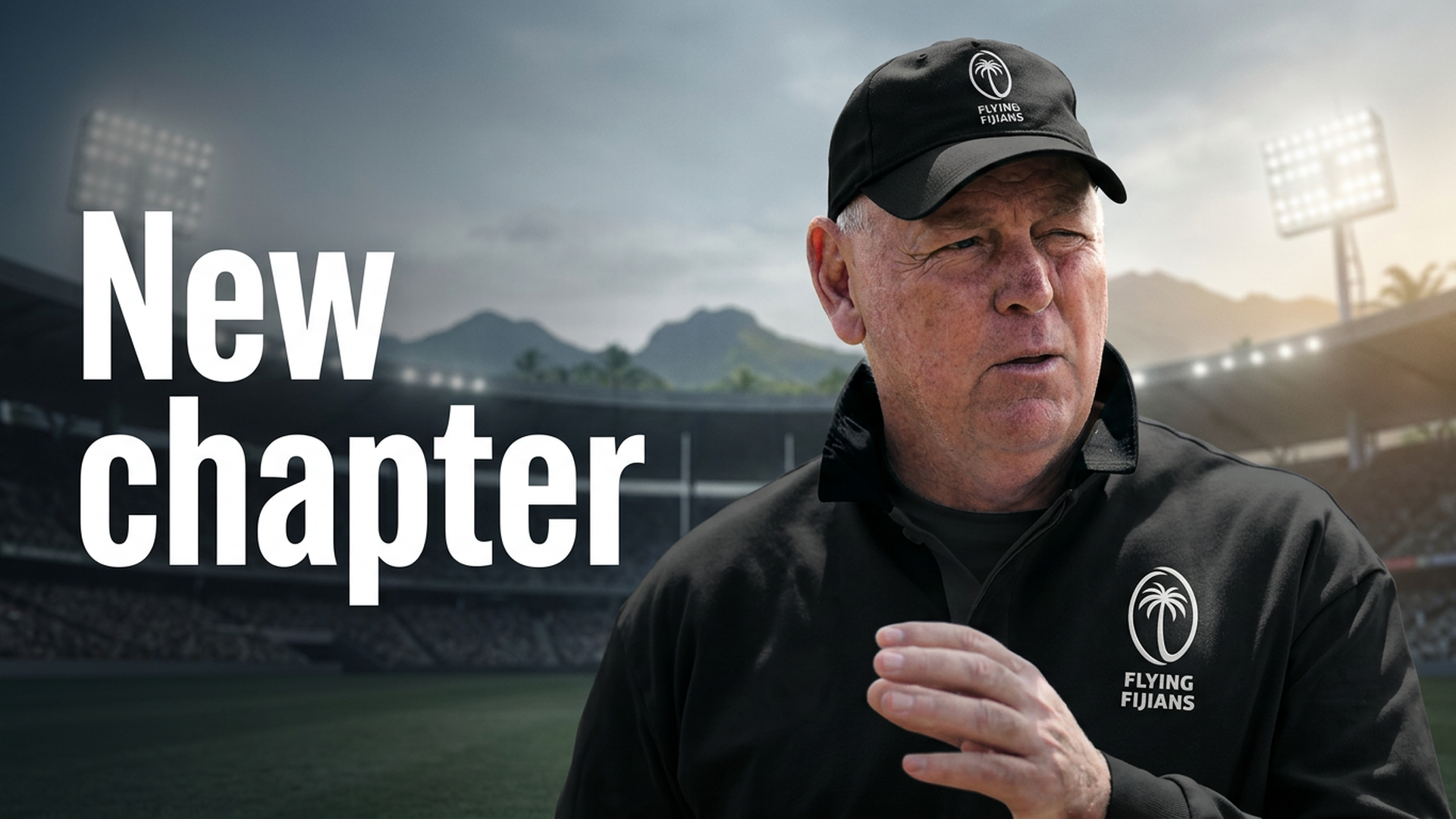
The 62-year-old Jacob Charles White was appointed as the new coach of the Fijian national team.
His appointment marked a defining moment of Fiji’s ambitious new chapter towards the World Cup in Australia next year.
A proven winner on the game’s biggest stage, White brings international pedigree, championship-winning experience and a deep understanding of what it takes to build a team capable of competing against the world’s best.
However, over almost every position he held, there is also a dark cloud.
He departed either before his contract was completed, or his contract was not renewed after a fall-out with his bosses.
There is no denying his qualities as a coach, even though some officials and players question his man-management skills.
“It is an incredible honour to be allowed to lead Fiji,” White said in a statement, issued by the Fiji Rugby Union.
“Fiji holds a special place in world rugby.
“There are very few nations where the game means so much to its people, and where the players bring such extraordinary natural ability, courage and passion to the field.
“Having coached at the highest level, including at a World Cup, I understand the preparation, discipline, belief and collective commitment required to compete against the best teams in the world.
“What excites me most about Fiji is the potential.
“This is a nation that has already shown it can challenge the game’s biggest powers.
“My responsibility is to work with the players, coaches and everyone involved in Fiji to build on that foundation and turn potential into consistent performances.”
(Continue below ….)
Jake White’s list of acrimonious departures
There is a distinct pattern. White would achieve significant early success, while later departing teams under contentious circumstances.
His reputation as a strategically astute, World Cup-winning coach is well-earned, yet his direct leadership approach, public criticisms of his teams, and tendency to explore other job opportunities often create friction with players and management.
- The Springboks (2007)
Success: White led South Africa to triumph at the 2007 World Cup in France.
Challenge: Despite this remarkable achievement, his relationship with the South African Rugby Union was severely strained. Following a tumultuous period filled with disputes and power struggles, SARU asserted that he did not formally reapply for his position. White made the decision to leave right after the tournament, expressing significant disappointment at being effectively ousted.
- The Brumbies (2013)
Success: White revitalised the Australian franchise, guiding them to the Super Rugby final in 2013.
Challenge: Merely two months post-final, he unexpectedly resigned with two years remaining on his contract. Although he stated that his departure was motivated by a desire to return to South Africa, it was widely understood that his frustration regarding being overlooked for the Wallabies head coaching role – a decision in favor of Ewen McKenzie – played a critical role in his exit, leaving the Canberra team in a precarious position.
- Sharks (2014)
Success: Upon taking the helm in Durban, White directed the Sharks to the Super Rugby semifinals in 2014.
Challenge: After just one season, White abruptly stepped down. He expressed a wish to pursue international opportunities leading into the 2015 World Cup, briefly collaborating with Tonga as a consultant. However, his quick departure left lingering disappointment for a Sharks organization that had invested heavily in a long-term strategy centered around his leadership.
- Montpellier (2017)
Success: Under White’s leadership, the French Top 14 team transformed its operations and celebrated victory in the European Challenge Cup in 2016.
Challenge: Tensions arose when White alienated the club’s president, Mohed Altrad, by discreetly exploring the RFU for the vacant England coaching position during a team trip to London. His rigid style of play and approach to man-management drew sharp criticism from both the French media and players. Ultimately, he departed at the conclusion of his contract following Altrad’s active search for a successor, as former players publicly condemned his reluctance to learn French or build rapport with the team.
- Bulls (2025)
Success: Joining the Bulls in 2020, White rejuvenated the team, leading them to consecutive Currie Cup victories and navigating three United Rugby Championship finals.
Challenge: In July 2025, White’s contract was terminated two years early due to a significant player revolt. Key figures, including co-captains Ruan Nortje and Marcell Coetzee, delivered an ultimatum to the CEO, stating that team members would not consider re-signing if White remained. This upheaval stemmed from White’s authoritarian leadership style and his public criticism of players, particularly following a disappointing 7-32 defeat to Leinster in the URC final where he openly questioned the caliber of his squad.
- Selborne College (2026)
Challenge: Demonstrating that such challenges are not confined to professional levels, White assumed the role of rugby consultant at Selborne College. However, he abruptly abandoned the project just months into his appointment, writing a scathing letter to the headmaster criticising the lack of “backing” and commitment to excellence. “My letter was merely to explain that if the Headmaster of a school and my old boy philosophy are not aligned, then I’m not your guy. Going forward, I will always be supportive to any of the schools rugby needs. The rules of engagement would be different, and I think everyone would understand that.”